BD650 Transistor Pinout, Equivalents, Features, Applications and Other Details
BD650 is a PNP Darlington available in TO-220 package. It is designed to be used as complimentary with BD649 in the output stages of audio frequency push pull applications. In this post we will discuss about BD650 transistor pinout, equivalents, features, applications and other details such as its advantages and disadvantages and more.
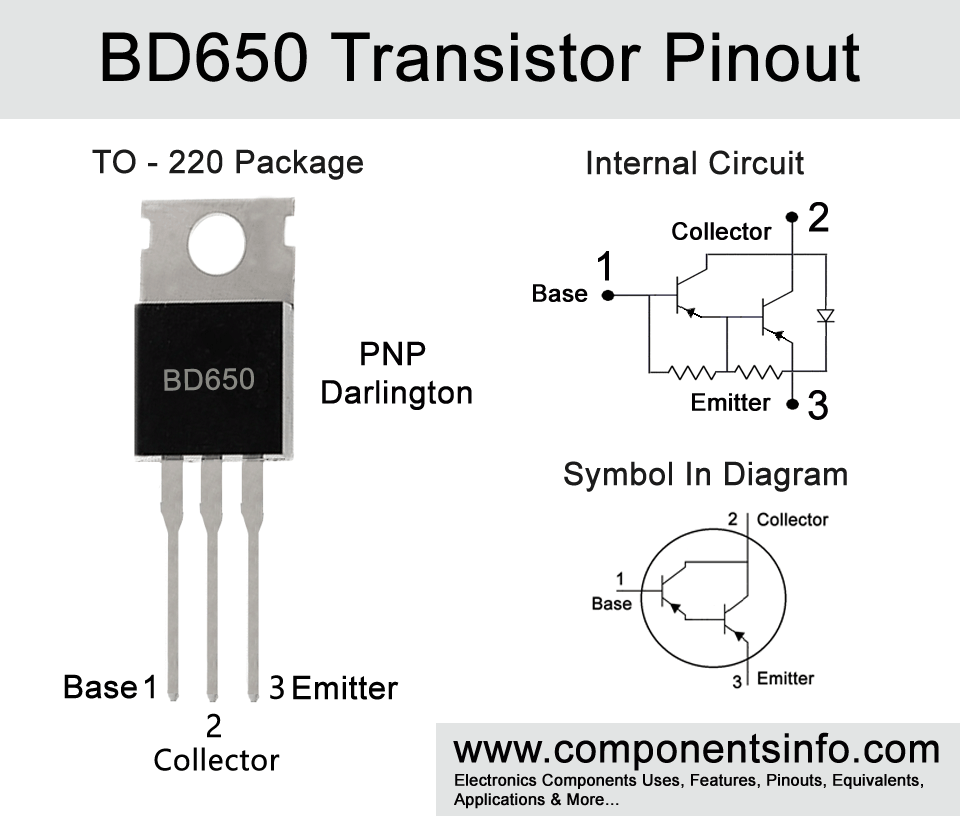
Pin Configuration:
The pin configuration of the transistor are as follows:
Pin1 is the Base pin: The Base pin is the first pin of the transistor, the current flow from collector to emitter can be controlled through this pin.
Pin2 is the Collector pin: The Collector drives the output load of the transistor.
Pin3 is the Emitter pin: The current flows from the collector to the emitter through the base.
Understanding the BD650 Transistor:
BD650 is a PNP Darlington transistor. A Darlington transistor is a transistor that looks similar to a BJT transistor from outside but internally it is different because it contains two transistors inside which are connected in a special way called Darlington. Connecting transistor in this way or Darlington way increases the output gain of the whole device to a great extent, making it useful for variety of applications.
Each PNP Darlington transistor contains two PNP BJTs (bipolar junction transistors) inside and each transistor has three layers which are P-type / N-type / P-type.
BD650 is not a single transistor of its kind but it is the transistor of a series which also contains other transistors such as BD464, BD648, BD652 then all are designed for complimentary use with their NPN complimentary transistors which are BD645, BD647, BD651 and the NPN complimentary of BD650 is BD649.
As discussed above that BD650 is designed for output stages of audio frequency push-pull amplifier circuits but it can also be used in other applications such as switching, relay controller, LED driver, motor driver etc.
NPN Complementary:
NPN Complementary of BD650 is BD649
Features and Specifications of the Transistor:
- Package Type: TO-220
- Transistor Type: PNP Darlington
- Max Collector Current(IC): –8A
- Max Collector-Emitter Voltage (VCEO): -100V
- Max Collector-Base Voltage (VCBO): -120V
- Max Emitter-Base Voltage (VEBO): -5V
- Max Collector Power Dissipation (Pc): 62.5mW
- Minimum DC Current Gain (hFE): 750
- Max Storage & Operating temperature: -55 to +150 Centigrade
Replacement & Equivalent
BD652, BD902, 2SB886, TIP137, TIP107, BDX54C, BDX34C, BDW94C, BDW48, BDW47, 2SB1228
Advantages & Disadvantages of Using BD650:
Here are the advantages and disadvantages of BD650 Darlington transistor:
Advantages:
A High Voltage Transistor: This transistor can drive a voltage load of updo 100V due to which it can be used in high voltage applications.
Collector Current of Upto -8A: The Collector current of -8A is enough to drive wide variety of low to medium power loads.
Good DC Current Gain Transistor: The minimum DC current gain of the transistor is 750 which makes it capable to drive load with less base current.
Good Power Dissipation:
The maximum power dissipation is 62.5 Watts which is good but you can also use heatsink to reduce heat of the transistor.
Low Saturation Voltage: The low saturation voltage helps the transistor to minimum voltage drop in the ON state, this feature improve the efficiency of the transistor.
Complementary Transistor Available: Another advantage of this transistor is that its complimentary pair is also available which can be used with BD650 to get even better performance.
Disadvantages:
Only 8A Collector Current: 8A collector current is good for low to medium power loads but for higher loads you have to look for other options
High VBE : In comparison with BJT the Darlington transistors has high VBE which makes it unsuitable for low voltage applications.
Slow Switching Speed: Darlington One of the problem with Darlington transistors is their slow switching speed which makes it unsuitable for high speed switching applications.
Saturation Voltage of 2 to 2.5V: High saturation makes power loss during working stage of the transistor which makes it less efficient for battery operated applications.
Applications:
Audio Amplifiers Output Stages (push-pull)
DC Motor Drivers
Push-Pull Amplifiers
Relay Drivers
Voltage Regulators
Battery Chargers
Switching Circuits
Power Supply Circuits
Conclusion:
BD650 is a PNP Darlington transistor available in TO-220 package. It is designed for output stages of audio frequency push-pull amplifier circuits but can also be used in wide variety of other applications. The collector to emitter voltage of the transistor is -100V which is a good VCEO and makes it suitable for high voltage applications. The maximum collector current is 8A from which you can drive low to medium power loads. The power dissipation is 62.5W which is also good. But on the other hand there are also some limitations of the transistor such as with only 8A collector current it cannot drive high power load, it has high VBE and saturation voltage of 2V to 2.5V but you are looking for a Darlington for AF push pull output stage applications or you want to generally purpose Darlington then BD650 can be a good choice.
Datasheet:
To download the datasheet just copy and paste the below link in your browser.
https://www.alldatasheet.net/datasheet-pdf/view/269345/ISC/BD650.html