BD647 Transistor Pinout, Equivalents, Features, Applications, Advantages, Disadvantages and More
BC647 is an NPN Darlington transistor available in TO-220 package. Designed to be used in general purpose applications. This article explains BC647 transistor pinout, equivalents, features, applications, advantages, disadvantages and other details.
Understanding the BD647 Transistor:
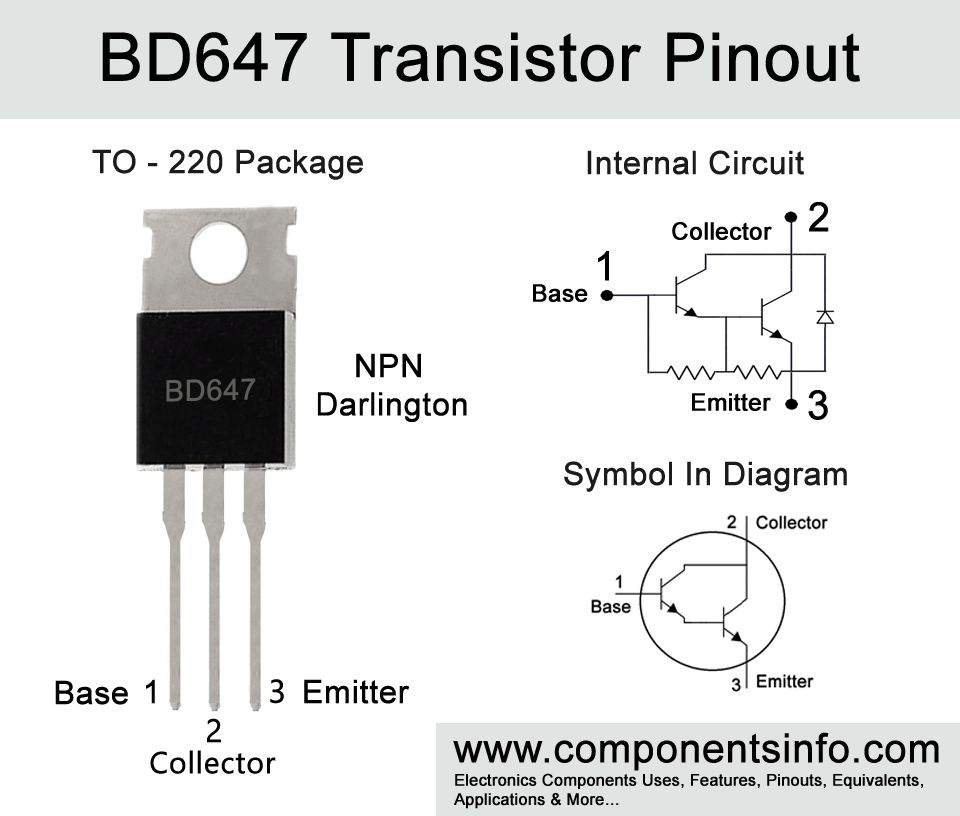
BD647 is an NPN power Darlington transistor available in TO-220 package. A Darlington transistor contains two transistor inside. These two transistors are connected in a way which is called Darlington. Connected the transistors in this way increase the output gain to a great extent.
Physically a Darlington transistor looks same as a normal BJT transistor and contains three pins as a normal BJT transistor has. Each NPN transistor inside a Darlington transistor has three layers same as a normal NPN BJT transistor which are N-type / P-type / N-type.
BD647 can be used in wide variety of general purpose applications such as audio amplifiers, audio equipment and switching circuits. The detailed list of its applications can be found under the applications heading.
Pin Configuartion:
The pin configuration of the transistor are as follows:
Pin1 is the Base pin: The first pin is the Base pin of the transistor, the flow of current from collector to emitter can be controlled through the base.
Pins2 is the Collector pin: The Pin2 is the Collector pin, this pin is also connected with the mounting base of the transistor. The load is derived from the Collector pin.
Pin3 is the Emitter pin: Pin1 is the Emitter pin of the transistor, the current enters from the collector pin travels from the Base to the Emitter and then goes to the ground.
Here are the features and specifications of the transistor:
- Package Type: TO-220
- Transistor Type: NPN Darlington
- Max Collector Current(IC): 8A
- Max Collector-Emitter Voltage (VCEO): 100V
- Max Collector-Base Voltage (VCBO): 80V
- Max Emitter-Base Voltage (VEBO): 5V
- Max Collector Power Dissipation (Pc): 625mW
- Minimum DC Current Gain (hFE): 750
- Max Storage & Operating temperature: -55 to +150 Centigrade
PNP Complementary of BD647:
PNP complimentary of BD647 is BD648.
Replacement & Equivalent:
BD645, BD649, BD651
Advantages & Disadvantages of Using BC647:
Here we are pointing out the advantages and disadvantages of choosing BD647 Darlington transistor for your circuits or applications.
Advantages:
A High Gain Transistor: BD647 is a high gain transistor with the minimum DC current gain of 750, the high gain of a transistor helps to drive the load with less base current which makes the driver circuit simple.
High Voltage Handling Capability: The maximum VCEO is upto 80V which makes it ideal to use in high voltage circuits under 80V.
High Power Dissipation of 62.5 Watts : The transistor is capable to handle 62.5 watts and by using a proper heatsink you can reduce the risk of overheating.
Good Collector Current of Upto 8A): The maximum continuous collector current is upto 8A, which makes this transistor capable to drive variety of loads such as power stages, different type of motors, battery chargers, power amplifiers, relays etc.
Low Saturation Voltage: The transistor has low saturation voltage as compare to some other Darlington transistors. Due to this low saturation voltage the transistor has minimum voltage drop during the ON state which makes its efficiency better.
Availability of Complementary Transistor: Another advantage of this transistor is that the complimentary transistor is available, so you can easily use its complimentary pair BD648 where you need.
Disadvantages:
Slow Switching Speed: Darlington transistors has low switching speed because the two transistors inside make the switching speed slow. Therefore it is now suitable for fast switching circuits.
Only 8A Collector Current: The maximum collector current is only 8A so you cannot use it in applications that require more than 8A.
Hige VBE : As compare to a normal transistor Darlington transistors have high VBE. This transistor has VBE of 2.5 to 3V so it is not ideal for low voltage circuits.
Saturation Voltage of 2 to 2.5V: As it is a Darlington transistor it also has high saturation voltage which creates some power loss and makes the efficiency of the transistor low.
BD647 Applications:
DC Motor Drivers
Audio Amplifiers
Relay Drivers
Push-Pull Amplifiers
Voltage Regulators
Battery Chargers
Switching Circuits
Power Supply Circuits
Safe Operating Guidelines:
Here are some important guidelines to safely operate the transistor.
- Do not drive the transistor to its absolute maximum ratings and always stay 20% below from these ratings.
- Always use a suitable heatsink with the transistor.
- Check pin layout before use.
- Storing and operating temperature range is from -55°C to +150°C.
Datasheet:
To download the datasheet just copy and paste the below link in your browser.
https://www.alldatasheet.com/datasheet-pdf/view/270136/SAVANTIC/BD647.html